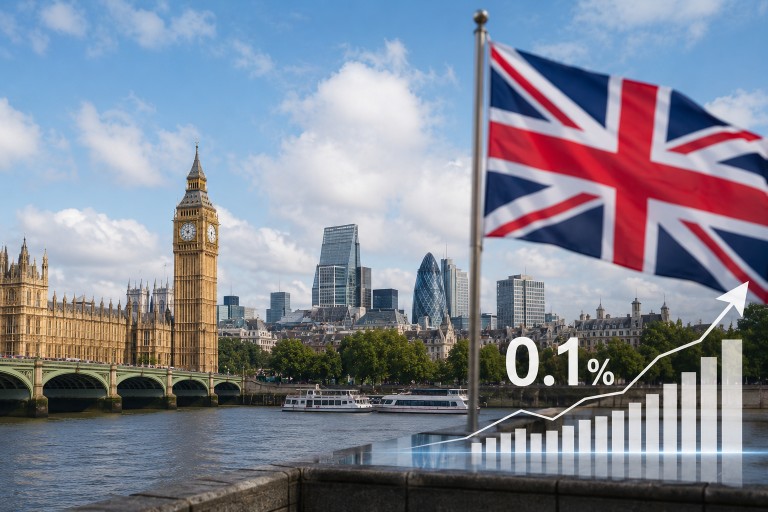
The UK’s economic landscape showed a modest improvement in May, with a 0.1% growth following the previous month’s 0.1% decline. This information reflects the latest figures from May, as reported by officials. The service sector played a pivotal role in this recovery, experiencing a 0.3% rise. However, the broader economic picture was tempered by a 0.5% drop in production and a more significant 0.8% decrease in construction activities.
Among the sectors, scientific research and development emerged as the standout performer, registering a substantial 5.1% increase over the month. This robust growth underscores the sector’s resilience and potential as a key driver of the UK’s economic recovery amidst various challenges.
Over the quarter ending in May, the UK economy expanded by 0.7%. This pace is slightly reduced compared to the 0.8% growth recorded in the preceding three-month period. Economists attribute the economy’s resilience to its ability to withstand pressures from rising energy prices and global uncertainties, particularly those stemming from the Middle East conflict.
Despite these positive signs, experts continue to express caution. They highlight that ongoing issues such as increasing energy costs and supply chain disruptions pose significant threats to sustained economic growth. These challenges could potentially hinder future progress if not addressed effectively.
In light of these developments, the International Monetary Fund has revised its growth forecast for the UK, projecting a 1% increase for the year. However, analysts remain wary, noting that the economic outlook is still shrouded in uncertainty due to persistent geopolitical tensions. This cautious optimism reflects the complex dynamics currently influencing the UK’s economic trajectory.