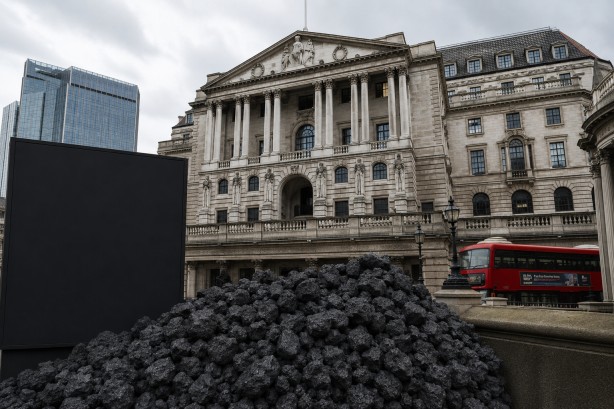
Starting this October, the Bank of England will cease accepting bonds linked to thermal coal companies as collateral in its lending operations. This decision represents a major move in the central bank’s efforts to mitigate climate-related financial risks.
In the financial world, commercial banks rely on bonds as collateral when borrowing from the central bank to facilitate daily operations and transaction settlements. However, under the new policy, bonds associated with thermal coal—a fossil fuel commonly used in power plants for electricity generation—will no longer qualify as acceptable collateral.
The Bank of England has highlighted the increasing financial risks faced by companies involved in the thermal coal sector, as global efforts to transition toward cleaner energy and achieve net-zero emissions intensify. This shift could lead to a depreciation in the value of coal-related assets over time. Furthermore, the policy permits the central bank to apply discounts to bonds from other sectors that also pose climate risks, aiming to shield its balance sheet from potential losses.
Environmental advocacy groups have applauded this initiative, viewing it as a strong message to financial markets and a potential catalyst for commercial banks to decrease their investment in highly polluting industries. Already, over 150 prominent financial institutions worldwide have imposed restrictions on engagements with the thermal coal sector.
Analysts suggest that the policy’s success will largely depend on the methodologies used to assess climate risks and the possibility of extending similar measures to other environmentally detrimental activities in the future.