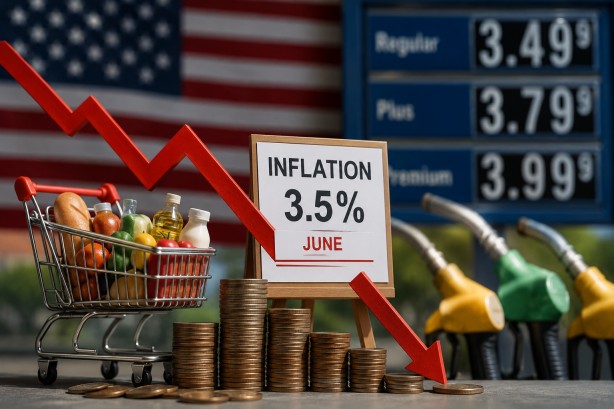
Inflation in the United States saw a reduction to 3.5% in June, primarily due to a temporary dip in energy prices that eased the burden on consumer expenses. The Consumer Price Index (CPI) revealed this slowdown following a period of higher inflation in previous months, with a notable 0.8% decrease in prices compared to May. The decline in gasoline and fuel prices played a significant role in this monthly reduction, counterbalancing the rises in costs associated with food, housing, utilities, and other daily expenditures.
Meanwhile, core inflation, which strips out the volatility of food and energy prices and is closely watched by the Federal Reserve, decreased to 2.6% on an annual basis. Despite this positive development, the easing of inflation might be temporary as escalating tensions in the Middle East have already triggered an increase in global oil prices. The rising crude oil prices are contributing to higher fuel costs for consumers and are impacting industries such as aviation and transportation with increased operational expenses.
The Federal Reserve is set to review the latest inflation figures in conjunction with labor market conditions during its policy meeting scheduled later this month. Although there has been a moderation in inflation, it remains above the Fed’s long-term target of 2%, which introduces uncertainty regarding the timing of any potential interest rate adjustments.
As the Federal Reserve deliberates its next steps, the recent developments in the energy sector could complicate their decision-making process. The interplay between global oil prices and domestic inflation continues to present challenges, with the potential for renewed inflationary pressures if energy costs remain elevated. This situation underscores the complexities facing policymakers as they strive to balance economic growth with inflation management.